Clock tattoo
Clock tattoo meanings
Clock tattoos deal with time-its passage, its value, and specific moments we want to remember. A clock can represent a birth time, a death time, a life-changing moment, or simply awareness that time is precious. Melting or broken clocks suggest time's distortion or the wish to escape its grip. The meaning depends entirely on context and personal intent.
Specific times vs symbolic clocks
Many clock tattoos show a specific time-a birth, a wedding, a loss, a turning point. These are deeply personal markers. Other clock tattoos use symbolic times (midnight for transitions, noon for new beginnings) or leave hands ambiguous. Decide whether your clock marks a real moment or represents time conceptually.
Clock styles and eras
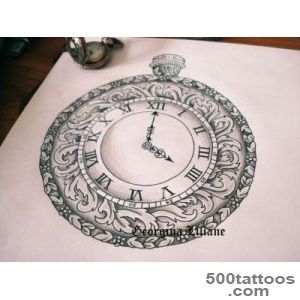
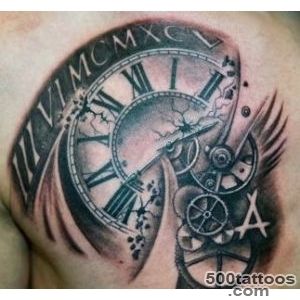
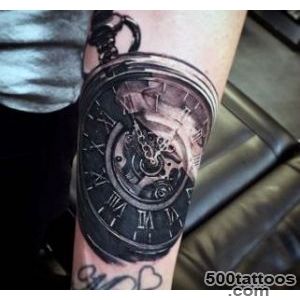
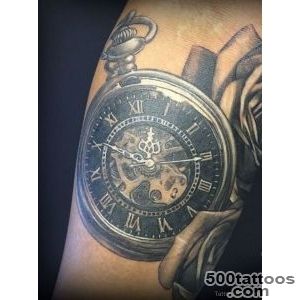
Pocket watches feel vintage, nostalgic, and connected to heritage. Wall clocks and grandfather clocks suggest home and tradition. Modern watches or digital displays feel contemporary. Melting Dal├н-style clocks are surreal and artistic. Sundials connect to ancient timekeeping. Choose a clock style that matches the era or feeling you want to evoke.
Roman numerals vs standard numbers
Roman numerals (I, II, III...) feel classic and timeless. Standard Arabic numerals (1, 2, 3...) feel more modern. Some designs omit numbers entirely, using marks or leaving the face blank. If including numbers, ensure they're readable at your chosen size-too small and they become illegible marks.
Companion elements
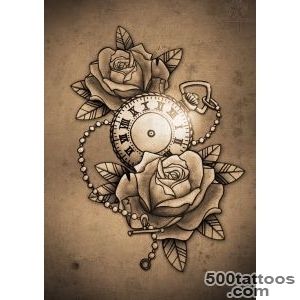
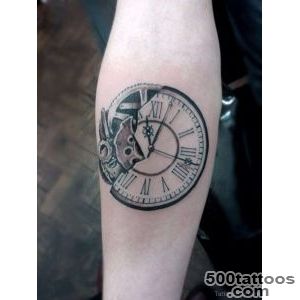
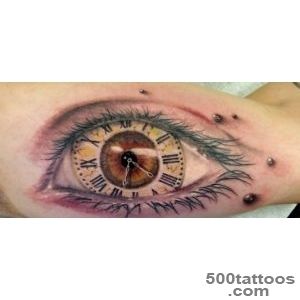
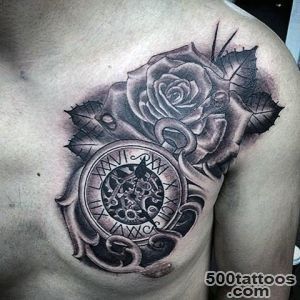
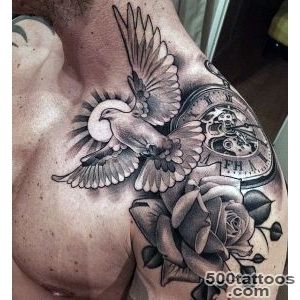
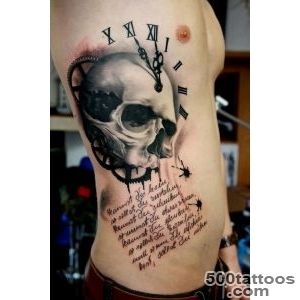
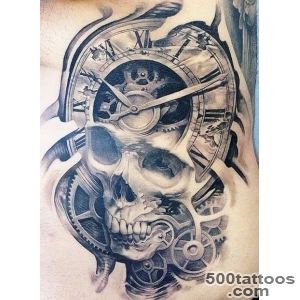
Clocks pair naturally with roses (beauty and time), skulls (mortality), eyes (watching time pass), butterflies (transformation through time), and names/dates. Gears and mechanisms can extend behind the clock face, especially in biomechanical styles. Hands holding clocks or clocks integrated into larger scenes add narrative depth.
Placement considerations
Clock faces are typically round, suiting flat areas well. Forearm, upper arm, and calf are popular. Chest and back allow for larger, more detailed designs. The round shape can adapt to slightly curved areas, but extreme curves may distort the clock face. Consider how the design looks from the most common viewing angle.
Clock tattoo designs and images