Hibiscus tattoo
Hibiscus tattoos capture the energy of tropical coastlines and warm climates in a single bloom, making them one of the most popular floral tattoo choices for people who associate flowers with joy rather than formality.
The flower is bold, wide-petaled, and instantly recognizable, which gives artists a strong silhouette to work with regardless of style or size.
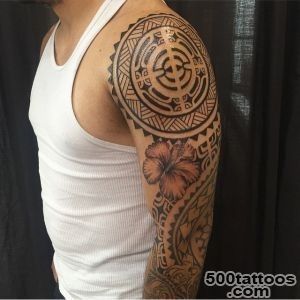
Because the hibiscus appears in Hawaiian, Filipino, Malaysian, and South Korean culture, it carries meaning that extends well beyond simple decoration.
Cultural meanings of the hibiscus
In Hawaii, the hibiscus is the state flower and symbolizes hospitality, beauty, and the warmth of aloha culture.
In South Korea, the mugunghwa, or rose of Sharon, is the national flower and represents resilience, because the bloom falls and regrows daily.
In Malaysia and the Philippines, the hibiscus is tied to national identity and appears on currency, stamps, and official emblems.
Understanding which cultural thread resonates with you helps you choose a presentation that feels genuine.
A general tropical hibiscus, without specific cultural markers, is a perfectly valid choice if your connection is to the flower itself rather than a particular tradition.
Color palette and mood
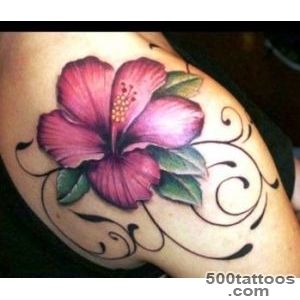
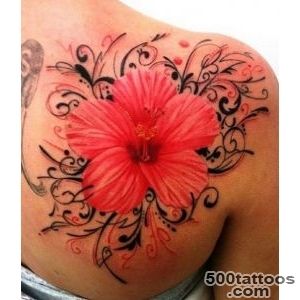
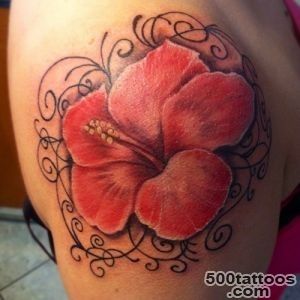
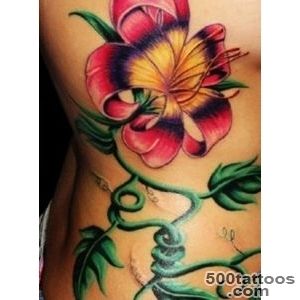
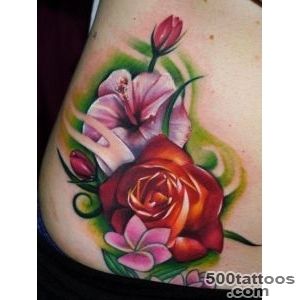
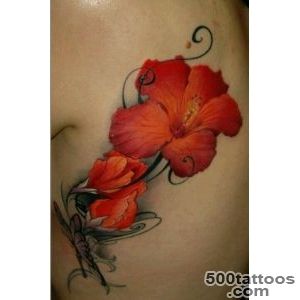
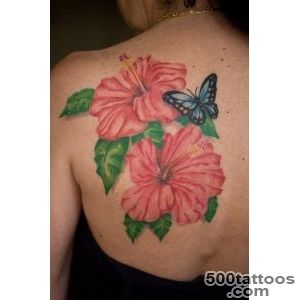
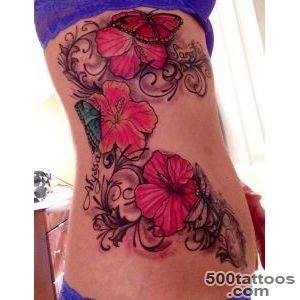
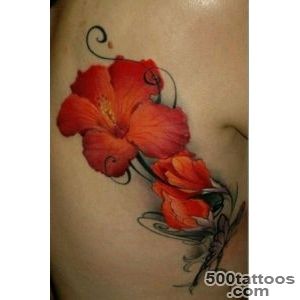
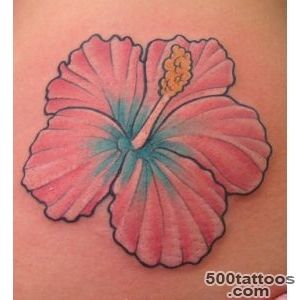
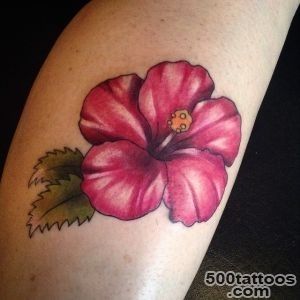
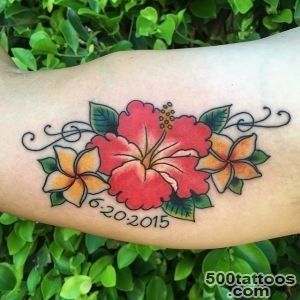
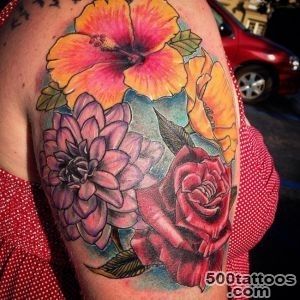
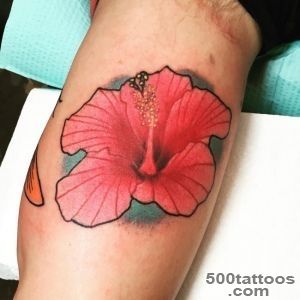
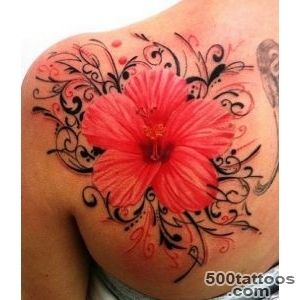
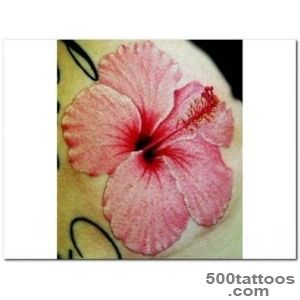
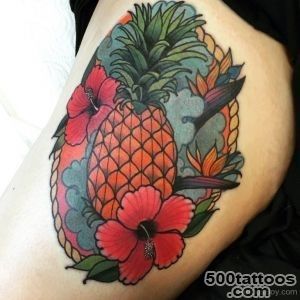
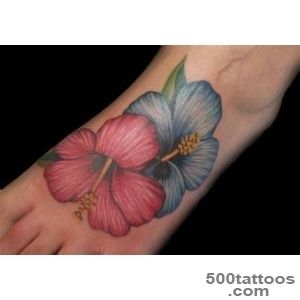
Classic red and pink hibiscus tattoos radiate warmth and feel immediately tropical.
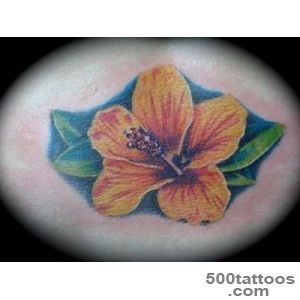
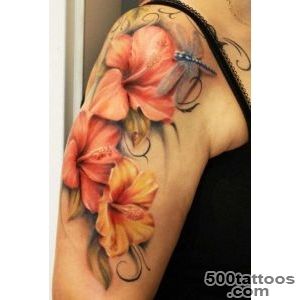
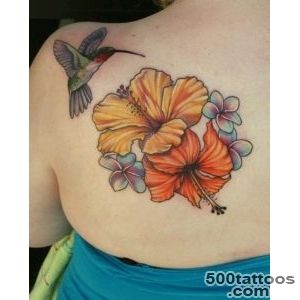
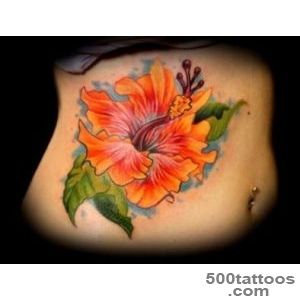
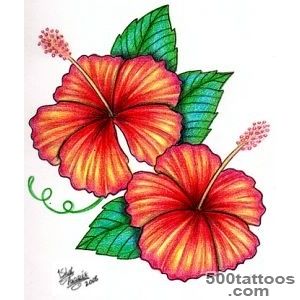
Orange and yellow variations suggest sunset energy and pair naturally with ocean or sky backgrounds.
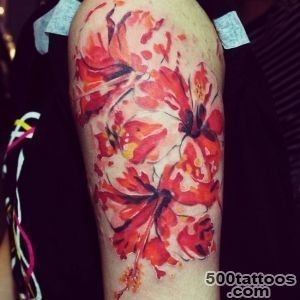
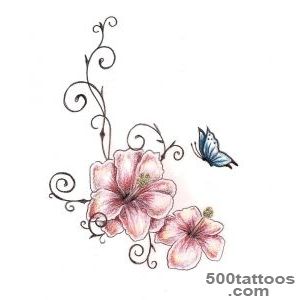
A watercolor approach adds splashes of blended color that soften the edges and give the flower an airy, painted quality.
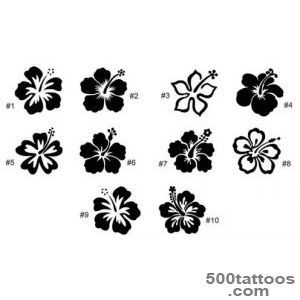
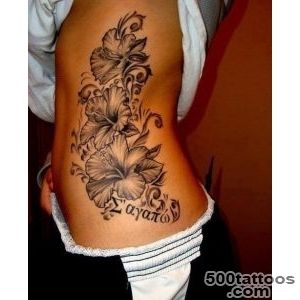
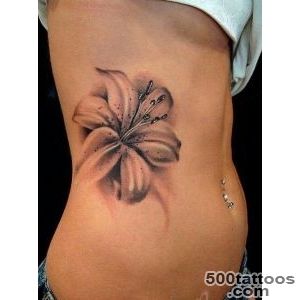
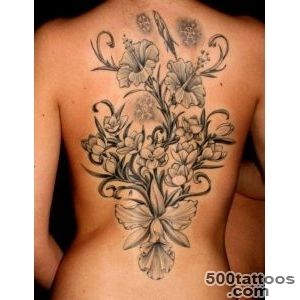
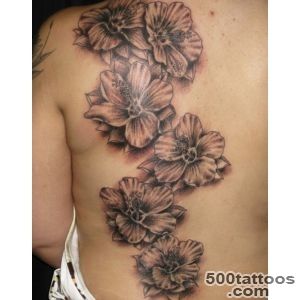
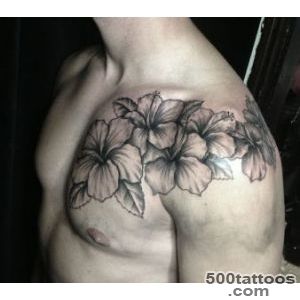
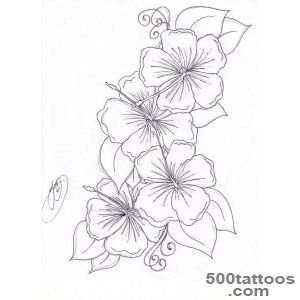
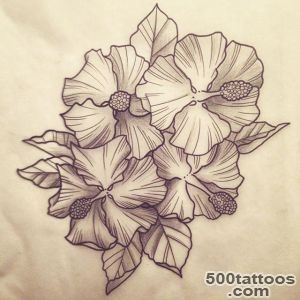
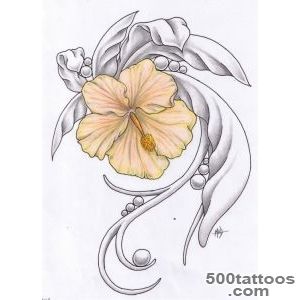
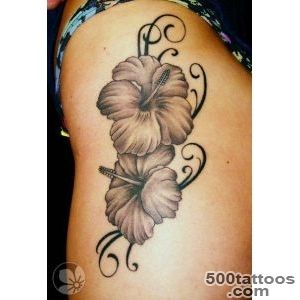
Black and grey hibiscus tattoos strip the tropical warmth and replace it with graphic elegance, which suits people who want the shape without the color commitment.
White ink highlights on dark skin can make the petal veins pop without adding visible color.
Composition and pairing ideas
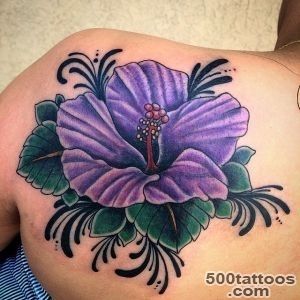
A single large bloom placed at an angle creates a bold, confident statement that needs no supporting elements.
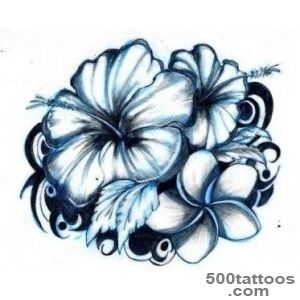
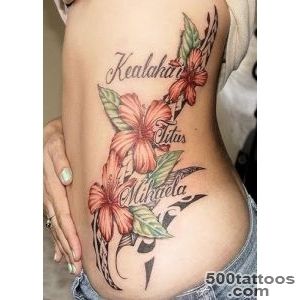
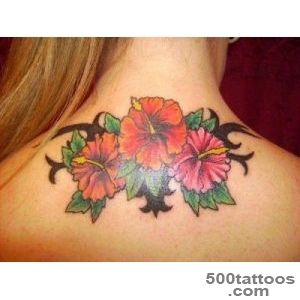
Clustering two or three blooms at different stages of opening adds visual rhythm and fills wider body areas naturally.
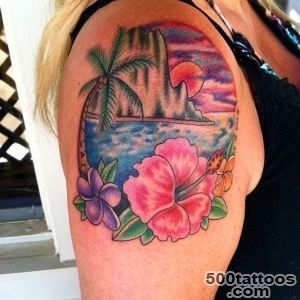
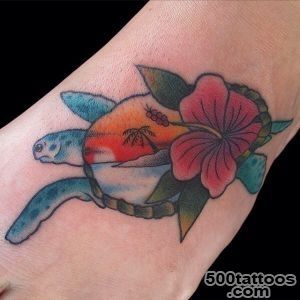
Pairing the hibiscus with waves, sea turtles, or palm leaves reinforces the island connection.
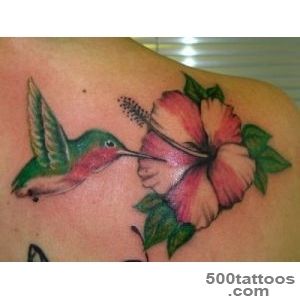
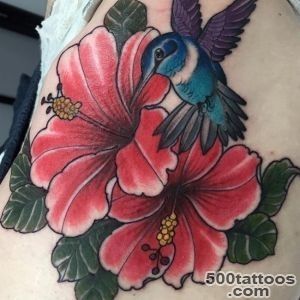
A hummingbird hovering near the petals adds a sense of motion and life to an otherwise still image.
Geometric framing, like a triangle or circle behind the flower, gives the tattoo a modern, composed feel.
Placement and sizing
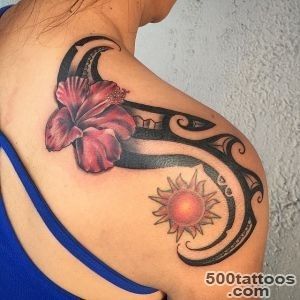
The shoulder and upper arm suit a single bloom that wraps slightly around the deltoid, following the natural curve.
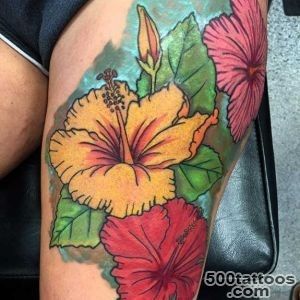
Thighs provide a wide canvas for detailed petals and surrounding foliage.
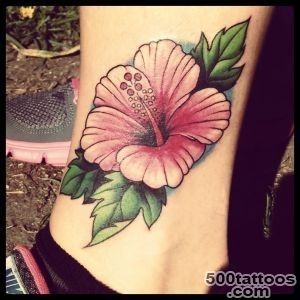
The ankle or calf works for smaller hibiscus designs, though simplified petal shapes hold up better at that scale.
Behind the ear or on the wrist limits you to a very small bloom, so reduce the petal count and skip interior details.
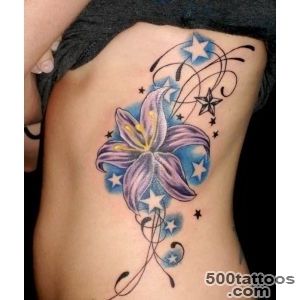
Ribcage placements allow tall, narrow compositions where the flower sits above a stem or vine.
Keeping the color vibrant
Red and pink inks are among the faster-fading pigments, so ask your artist about premium pigment brands that hold saturation longer.
Sunscreen is critical for color tattoos on exposed skin; UV light breaks down warm pigments more aggressively than cool ones.
A touch-up after the first year can restore any petal edges that softened during healing.
Moisturizing the tattooed skin regularly slows the dull, chalky look that develops when colored tattoos dry out over time.
Hibiscus tattoo designs and images