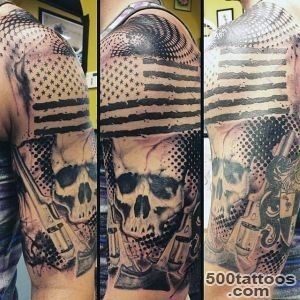
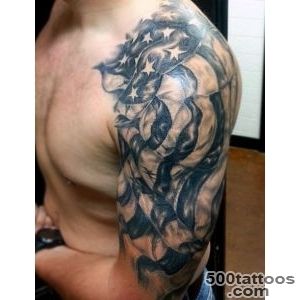
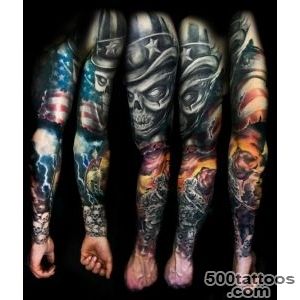
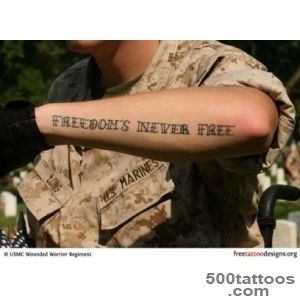
Military tattoo
Military body art is one of the oldest and most meaningful categories in the history of permanent marking. From ancient tribal warriors to modern special operations forces, the practice has served as identification, protection, morale, and memorial across nearly every armed conflict in recorded history.
Historical Roots of Service Marking
Ancient Roman legionnaires were branded or marked to prevent desertion. Celtic and Pictish warriors decorated themselves before battle to intimidate enemies and invoke spiritual protection. During the First World War, soldiers began choosing designs that would help identify their remains if they fell in combat, a practical function that carried enormous emotional weight. Peter the Great introduced mandatory wrist markings in the Russian military, using gunpowder as pigment to create crosses that served as identification.
Branch Insignia and Unit Pride
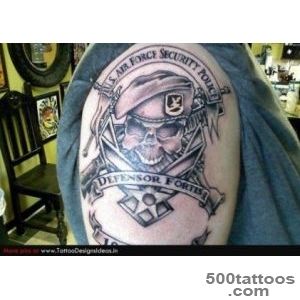
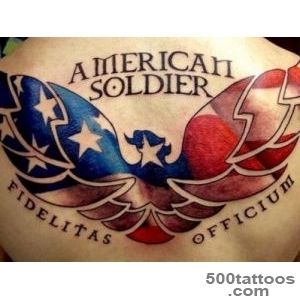
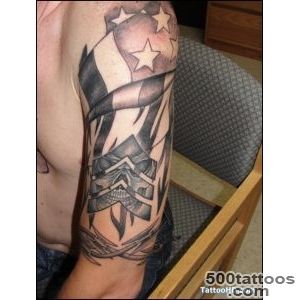
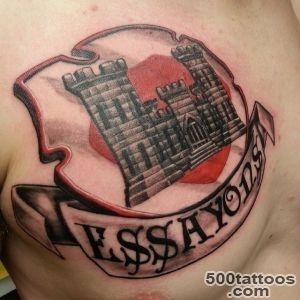
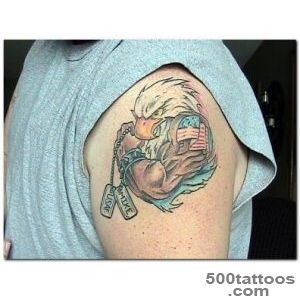
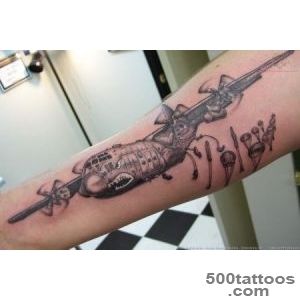
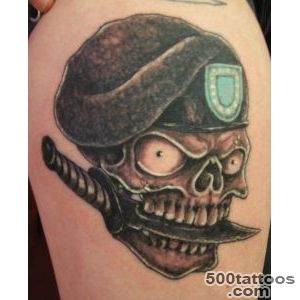
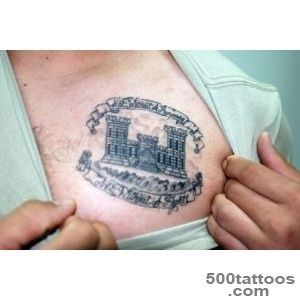
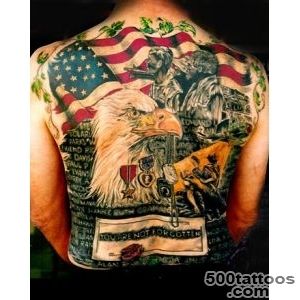
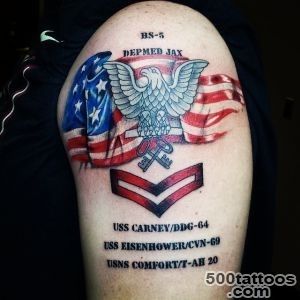
Each branch of military service carries its own visual language. Eagles, anchors, tridents, wings, and crossed rifles all reference specific roles and traditions. Unit patches, division crests, and squadron logos are popular choices because they tie the wearer to a specific group of people who shared the same experience. These designs carry a sense of belonging that outsiders may not fully understand but can instantly recognize as earned.
Memorial and Fallen Comrade Tributes
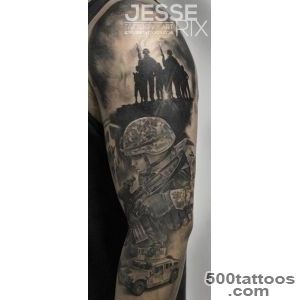
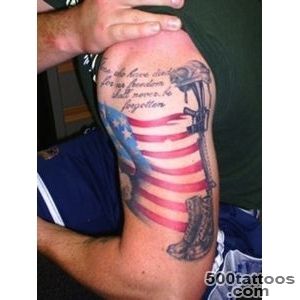
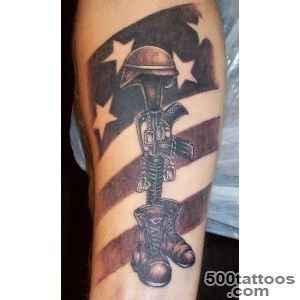
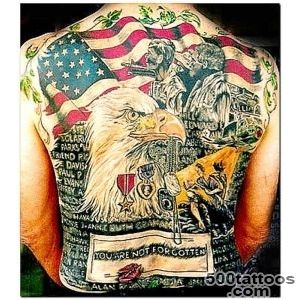
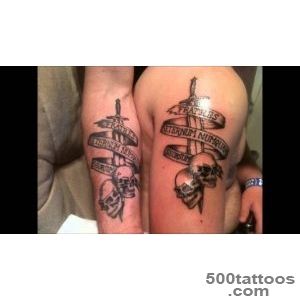
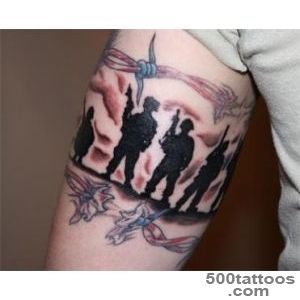
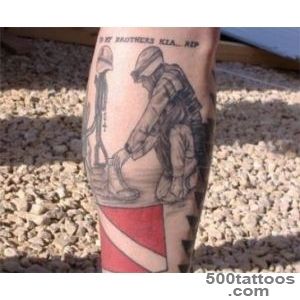
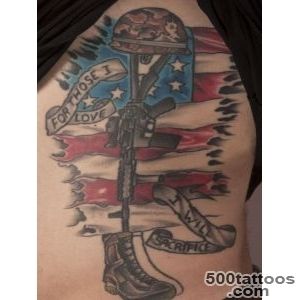
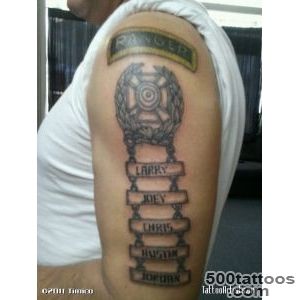
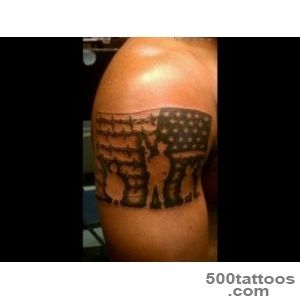
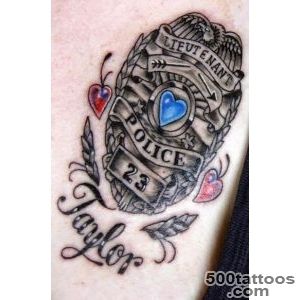
Many service members ink the names, dates, or portraits of friends lost in combat. Dog tags, boots with a rifle and helmet, and coordinates of significant locations serve as permanent reminders of sacrifice. These pieces are among the most emotionally charged work an artist will ever perform, and the best results come from sessions where the artist takes time to hear the story behind the request.
Modern Regulations and Visibility
Most contemporary armed forces have specific policies about placement, size, and content. Some intelligence and special operations units restrict visible markings entirely to prevent identification. Understanding your branch's current regulations before getting inked can prevent career complications. Many veterans wait until after discharge to get the piece they wanted during service, and the delay often leads to a more thoughtful design.
Styles That Honor the Subject
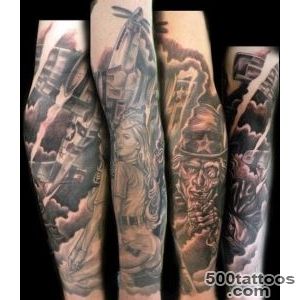
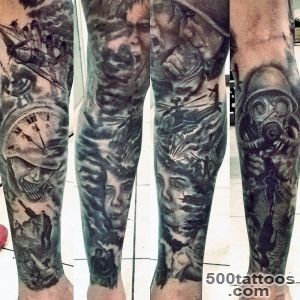
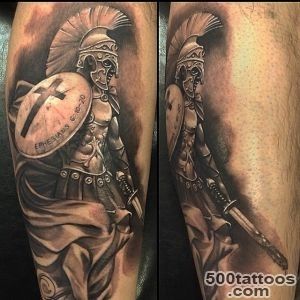
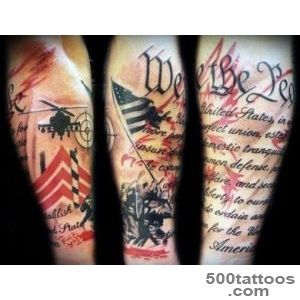
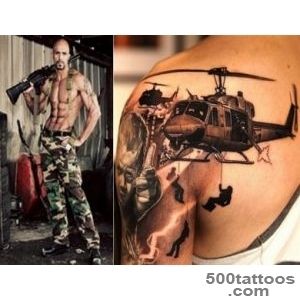
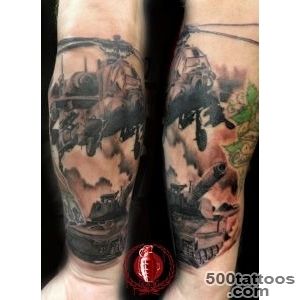
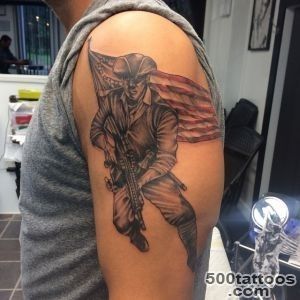
Black and gray realism is the dominant style for military portraits and equipment renderings. American traditional suits classic insignia and eagles with bold, lasting outlines. Script and coordinates in clean, simple fonts ensure that names and dates remain legible for decades. Avoid trendy or overly decorative styles for memorial work; clarity and dignity matter more than novelty.
Placement and Longevity
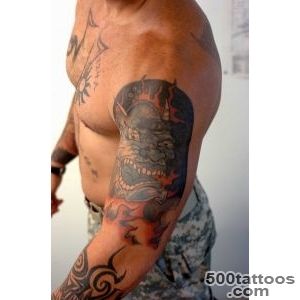
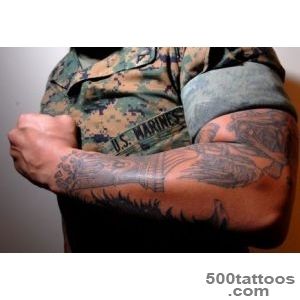
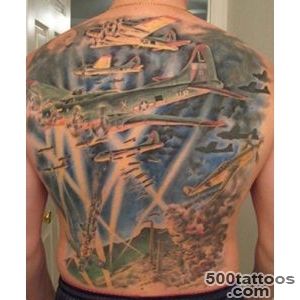
The upper arm, chest, and back are the most common locations, offering space for detailed compositions that can be covered in professional settings. Forearm pieces are popular for names and dates that the wearer wants to see daily. Choose bold line weights and strong contrast to ensure the piece remains sharp through years of sun exposure, physical activity, and aging.
Military tattoo designs and images