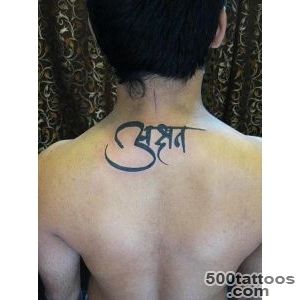
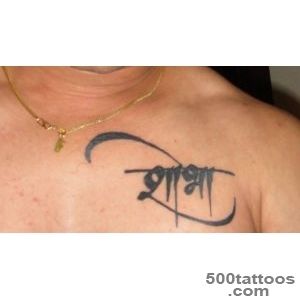
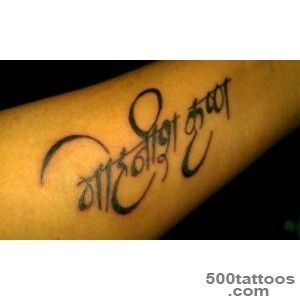
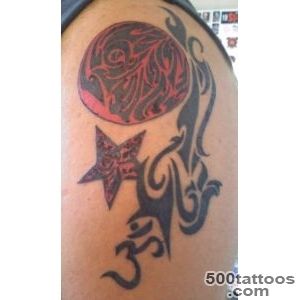
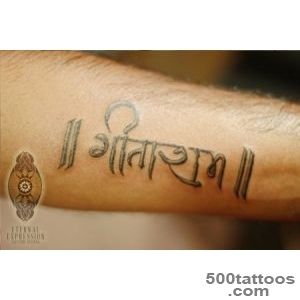
Hindi tattoo
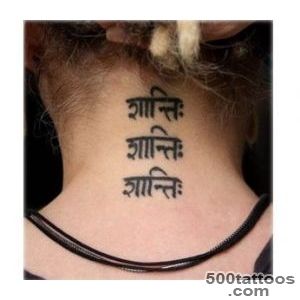
Hindi script tattoos carry personal meaning through a writing system used by hundreds of millions of people, and the visual weight of Devanagari letterforms translates naturally into body art.
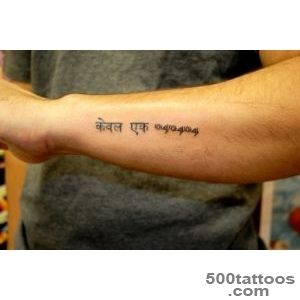
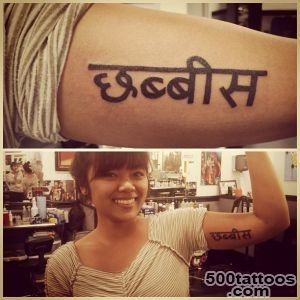
The characters have a distinctive horizontal line called the shirorekha that connects each word, giving even short phrases a strong graphic presence.
Because the script is phonetic and precise, getting the spelling right is not optional, it is the foundation of the entire piece.
When done correctly, a Hindi tattoo can express a value, honor a name through permanent lettering, or preserve a phrase that shaped your thinking.
Reasons people choose Hindi script
Some are native speakers who want a word from their mother tongue etched into their skin as a cultural anchor.
Others discovered a concept during travel, study, or spiritual practice and feel the original language captures it better than any translation.
Common single-word choices include terms for strength, courage, peace, love, and family.
Short phrases or mantras are also popular, especially lines from prayers or philosophical texts that resonate on a personal level.
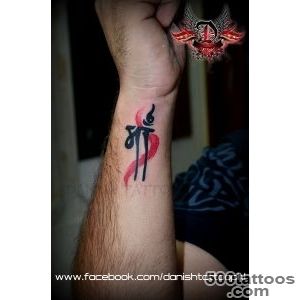
Names of children, parents, or partners written in Devanagari can feel more intimate than their Romanized equivalents.
Getting the translation right
Machine translation tools handle Hindi poorly when it comes to context, register, and grammatical gender, so they should never be the only source.
Work with a fluent reader, ideally someone who writes in Hindi regularly, to confirm that the word order, spelling, and tone match your intent.
If you are transliterating a foreign name into Hindi, verify that the phonetic representation sounds correct when read aloud.
Pay attention to conjunct consonants, where two or more letters merge into a single glyph, because mistakes here change the sound and meaning.
Print the final version at tattoo size and check readability before the appointment.
Layout and lettering style
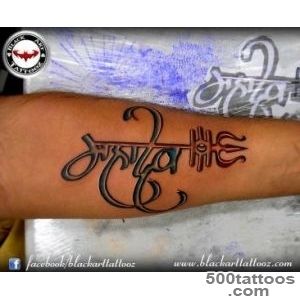
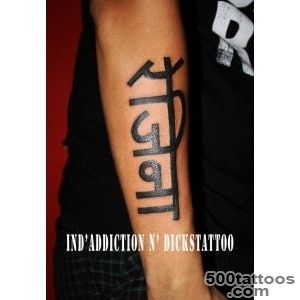
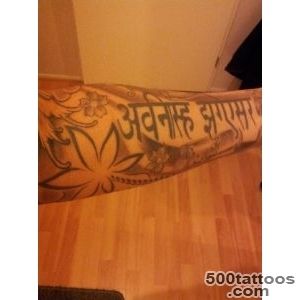
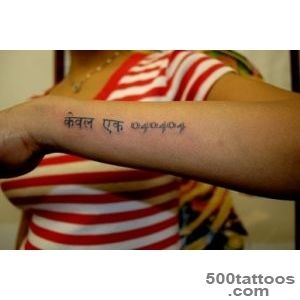
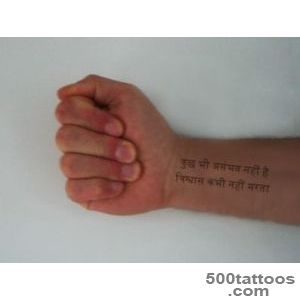
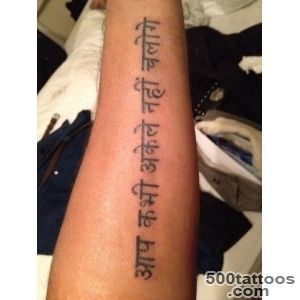
The shirorekha headline bar naturally creates a clean horizontal band, making forearm, collarbone, and upper-arm placements a strong fit.
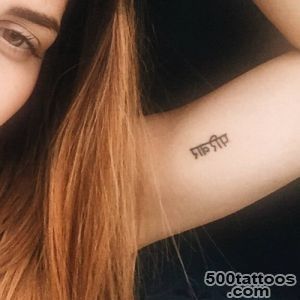
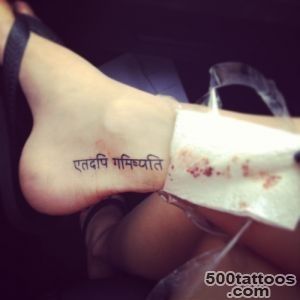
Thin strokes look elegant but can blur as the ink settles, so ask your artist about minimum line widths for long-term clarity.
Bold, blocky letterforms hold up at larger sizes and give the piece a stronger visual anchor.
If you want a calligraphic feel, make sure the variation in stroke thickness is intentional and consistent, not random.
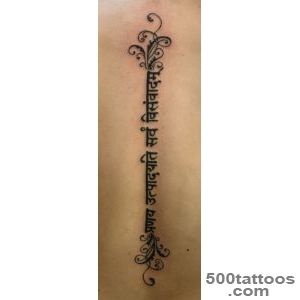
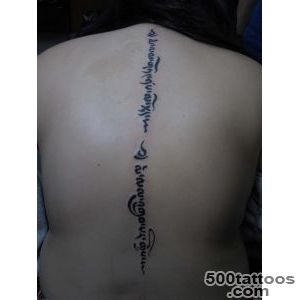
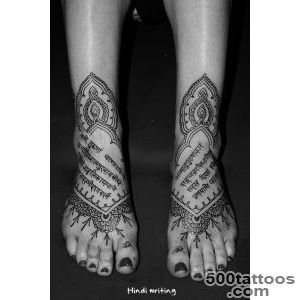
Avoid stacking too many lines of text vertically unless the spacing is generous enough to prevent the words from merging.
Respecting cultural context
Hindi is not just a decorative alphabet; it is tied to real communities and daily life across South Asia.
Choosing a word solely because it looks beautiful without understanding its meaning can come across as careless.
Religious phrases from Hindu, Sikh, or Jain traditions carry additional weight, so research the origin before committing.
When in doubt, ask a native speaker whether the phrase feels appropriate in a tattoo context.
Respectful intent, combined with accurate execution, turns a script tattoo into something both personal and culturally aware.
Aftercare for script tattoos
Devanagari characters depend on crisp edges and consistent line weight, so follow aftercare closely during the first two weeks.
Avoid submerging the tattoo in water and keep friction from clothing to a minimum.
Once healed, light moisturizing and sun protection will slow the gradual softening that all fine-line work experiences.
If any section of a character blurs or drops out, a single touch-up session can restore the full word without reworking the whole piece.
Hindi tattoo designs and images