Simpson tattoo
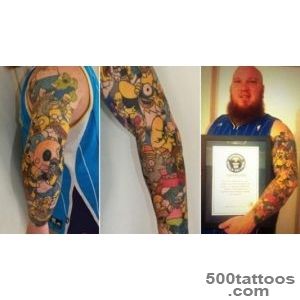
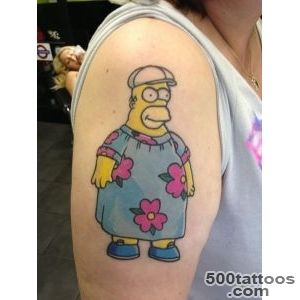
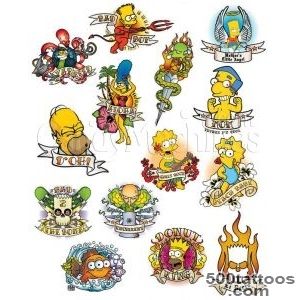
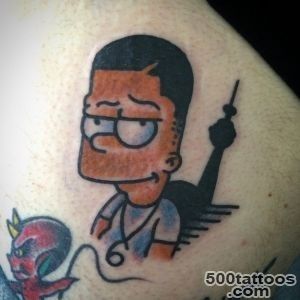
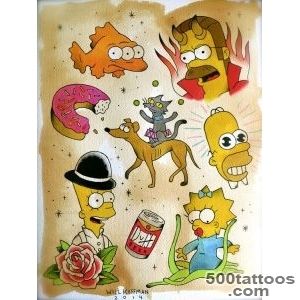
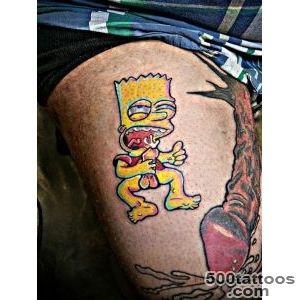
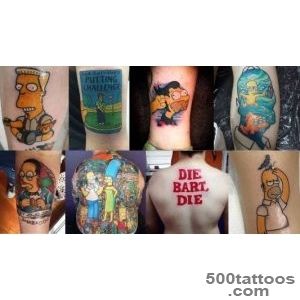
The Simpsons hold a special place in pop culture tattoo art. More than three decades on air have turned Homer, Bart, and the rest of Springfield into instantly recognizable icons that translate well to skin. From faithful character portraits to surreal mashups, Simpson tattoos let fans wear their humor on their sleeve.
Why the Simpsons became tattoo icons
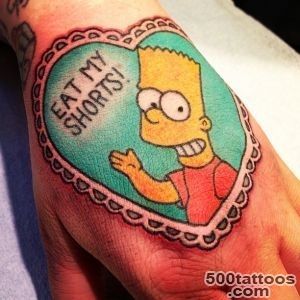
The show's bold outlines, flat color fills, and exaggerated features mirror the technical strengths of traditional tattooing. Yellow skin, big eyes, and four-fingered hands are easy to read at any scale. The characters also carry layered cultural meaning-Bart embodies rebellion, Homer represents lovable imperfection, and Lisa stands for intelligence against the odds.
Popular character choices and scene references
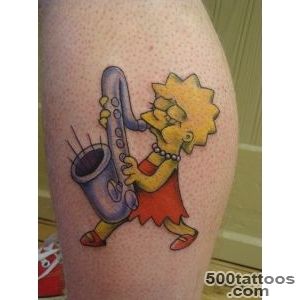
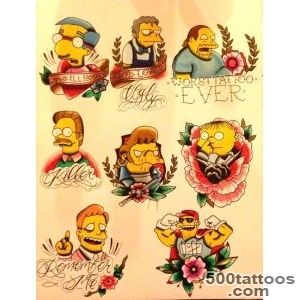
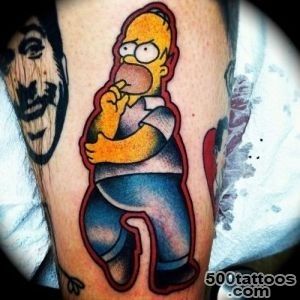
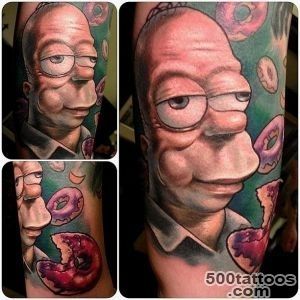
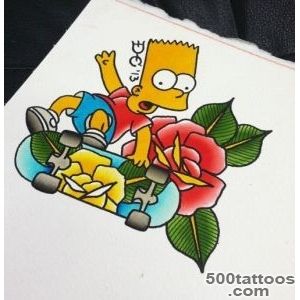
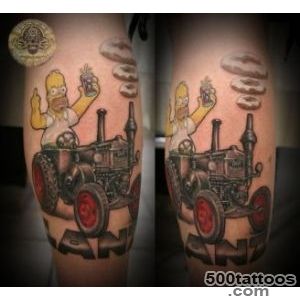
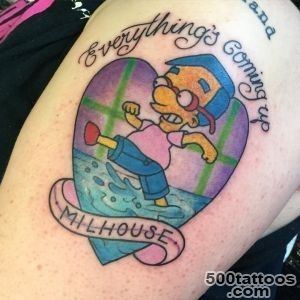
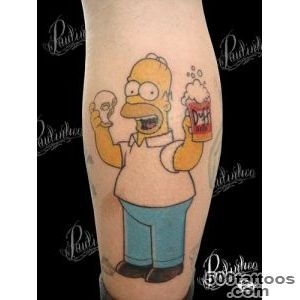
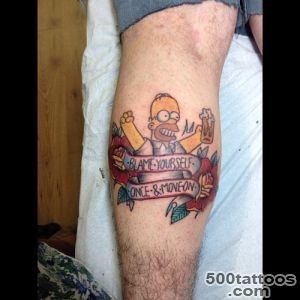
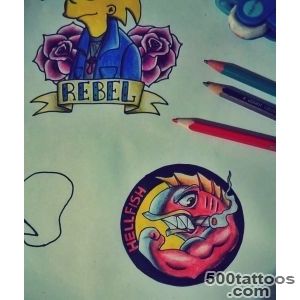
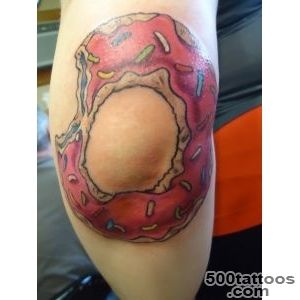
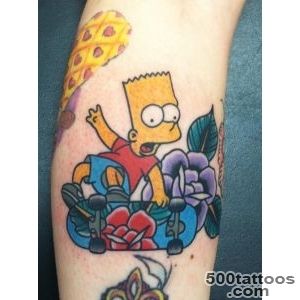
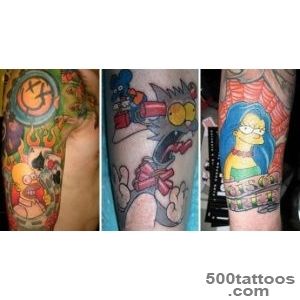
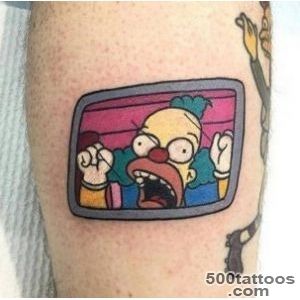
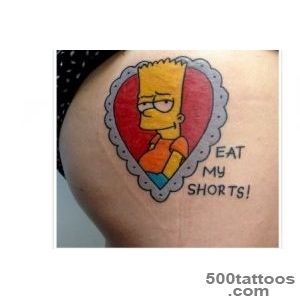
Bart with a skateboard or slingshot remains the top pick for fans who identify with mischief. Homer holding a donut or Duff beer appeals to those who embrace comedy and self-awareness. Deep-cut fans choose Sideshow Bob, Mr. Burns, or Ralph Wiggum for niche humor. Scene recreations like the couch gag or bushes meme add narrative depth.
Mashup and parody designs
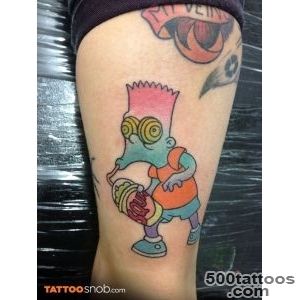
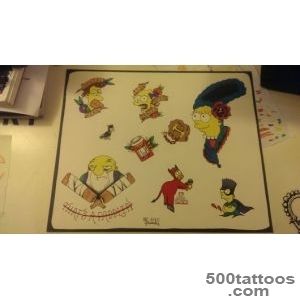
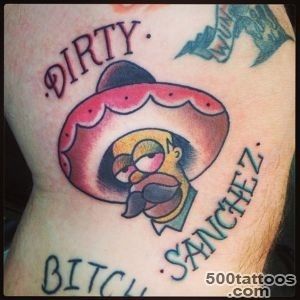
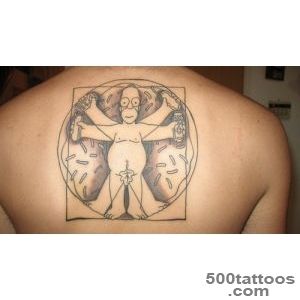
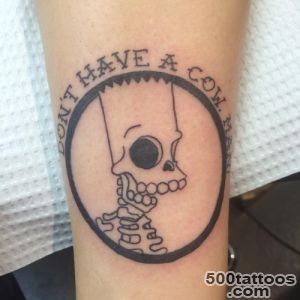
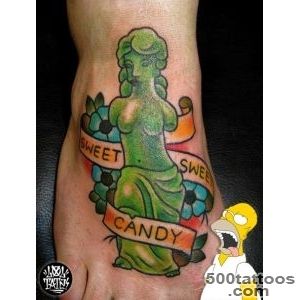
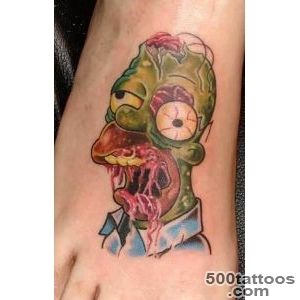
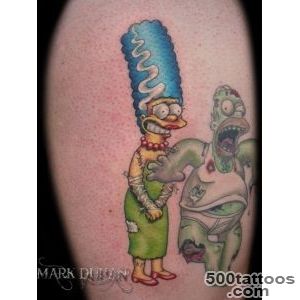
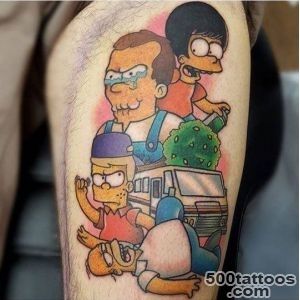
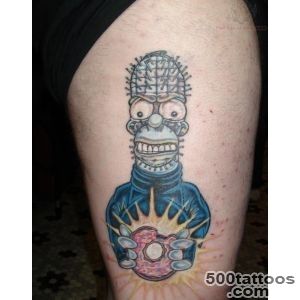
Some of the most creative Simpson tattoos blend Springfield characters with other universes. Homer as a Renaissance painting, Bart in a streetwear brand parody, or the family reimagined in Day of the Dead style all play on the show's satirical DNA. These mashups reward viewers who catch the double reference.
Color vs black-and-grey cartoon ink
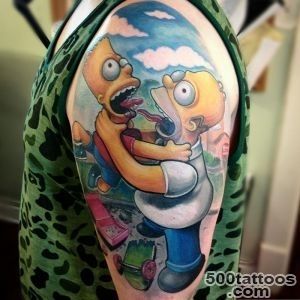
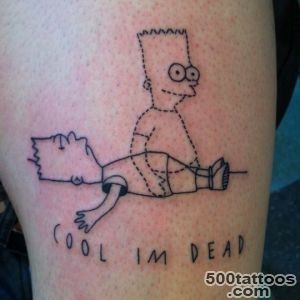
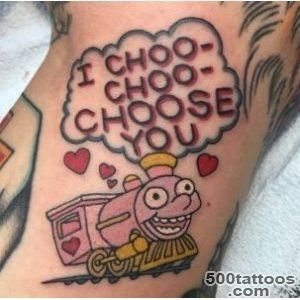
Full-color Simpson tattoos stay closest to the source material and age well thanks to the show's limited, saturated palette. Black-and-grey versions add an unexpected edge, turning cartoon characters into fine art studies. Some artists use a selective color approach-yellow skin with grey surroundings-to create visual contrast.
Sizing and placement for animated characters
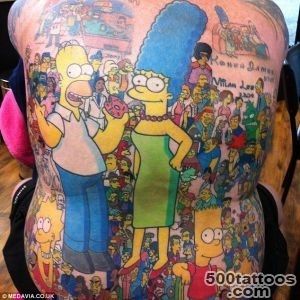
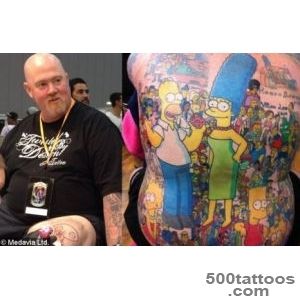
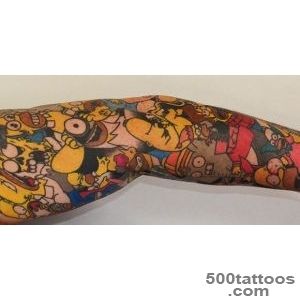
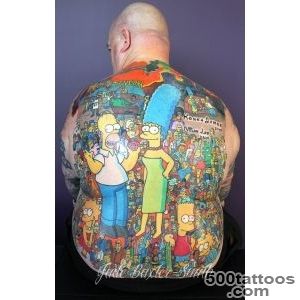
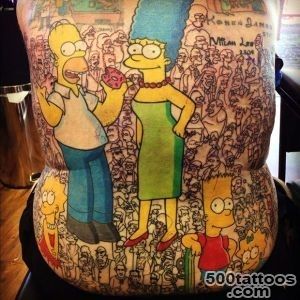
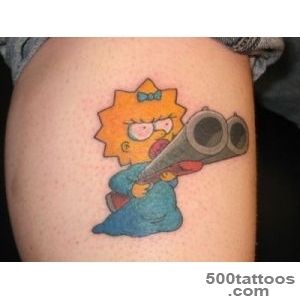
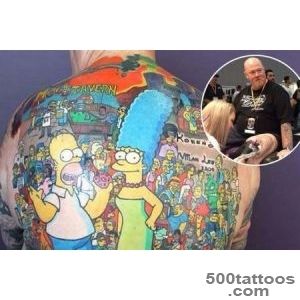
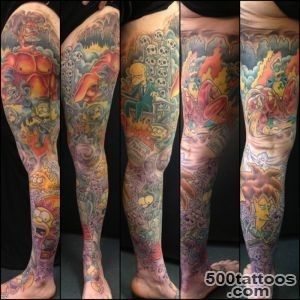
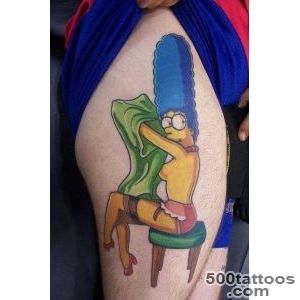
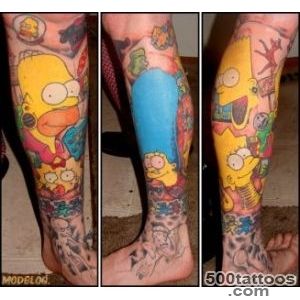
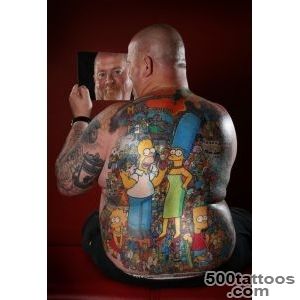
Small Simpson tattoos work on the ankle, wrist, or behind the ear for subtle fandom. Medium pieces on the calf or forearm allow full character poses with background elements. Large compositions across the thigh or upper back can include multiple characters and Springfield landmarks for a mural-style piece.
Simpson tattoo designs and images